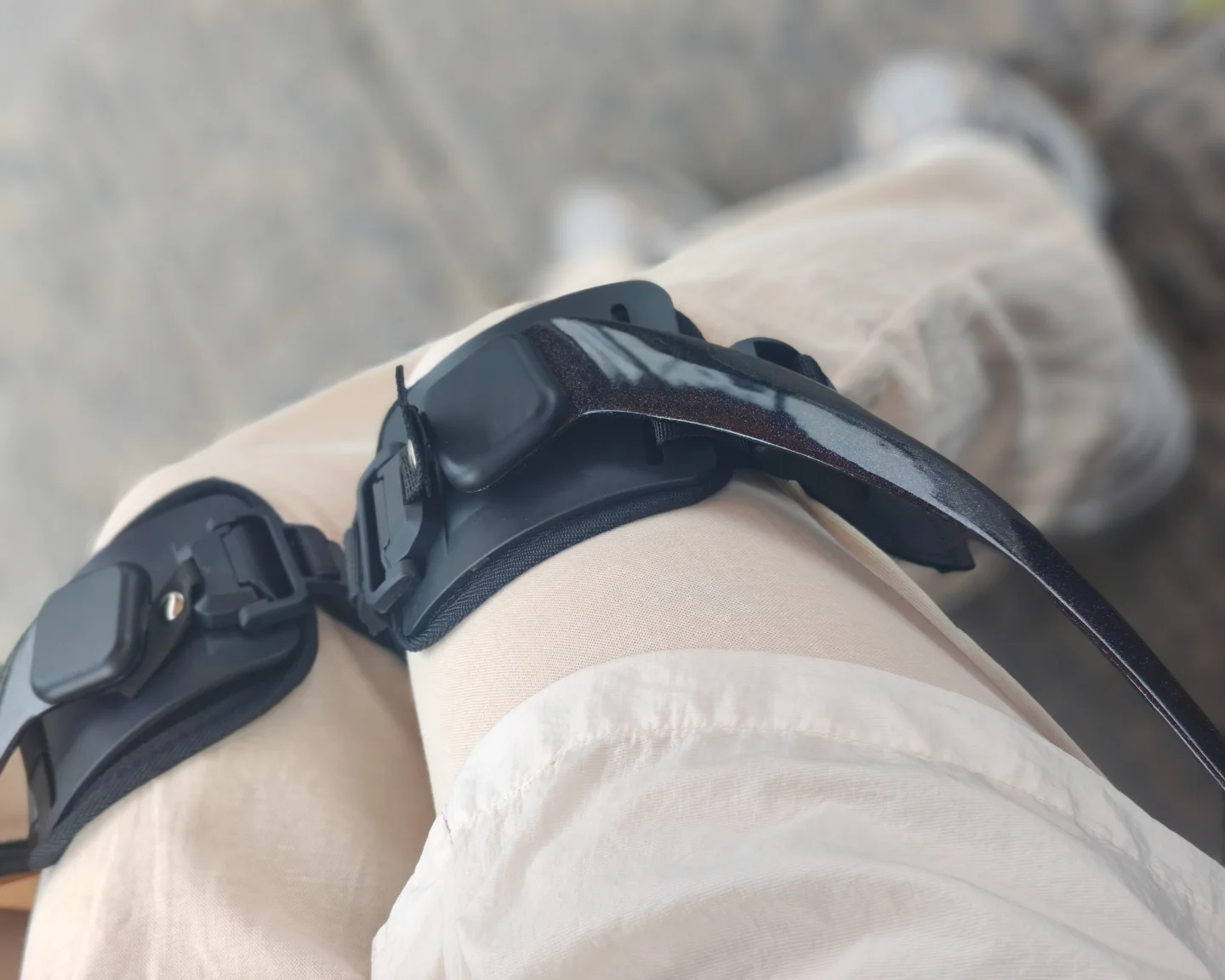
Powered consumer exoskeletons sense movement, use a controller to judge the walking phase, and command motors to assist a joint such as the hip or knee. How helpful that feels depends mainly on matching the person and the task, rather than turning the assistance up as far as it goes. Fit the device for the activity you want to do, then choose a mode that works with your usual stride.
The basic loop: sense, decide, assist
The process starts with movement. Sensors collect information as you begin a step, and the control system uses that input to determine how to command the motors. The device applies assistance through its attachments to your body, with a battery supplying energy for powered operation.
The Dnsys X1 technical FAQ gives a specific example. Angle sensors and an inertial measurement unit detect movement; its control system calculates torque commands, and the motors provide assistance or resistance according to the selected mode. The X1 primarily assists at the hips.
Part of the system
Its job
What to pay attention to when wearing it
Sensors
Detect movement
How the device responds when you begin or change a step
Controller
Determines the motor command
Whether the timing suits your walking rhythm
Motors and attachments
Apply assistance through the wearable structure
Contact at the waist and legs as you move
Battery
Supplies energy for powered operation
Complete worn weight and the charge needed for your outing
For a first trial, begin with ordinary walking. Try starting, pausing, and taking a shorter step before moving onto sustained climbing. That gives you a way to notice the assistance while you are still close to a convenient place to adjust the fit.
Which joint receives the assistance?
A hip-assist device works through attachments around the waist and thighs to help movement at the hip. A knee-assist design applies assistance at a different joint. When looking at a device, identify the joint it acts on and where the attachments sit against your body.
Hypershell’s current-series technical overview describes a sensor system, motion-control processing, and dual motors in a hip-assist layout. Dnsys’s sensor explanation and Hypershell’s motor-layout description illustrate how movement detection and powered assistance work together.
The waist unit needs to stay comfortable as your legs move. Try the equipment with the clothes and bag you expect to wear, then take a few steps of different lengths. Check that the attachments stay in place and that you can stop and turn at your normal pace.
Many consumer walking devices use a compact waist-and-leg arrangement. For a day walk, the parts you will actually wear matter more than the appearance of a full robotic suit: look at how the waist unit, leg attachments, battery, and bag fit together.
Assistance and resistance serve different tasks
In an assistance mode, the motors help movement. A resistance mode provides an opposing force for a different activity. Dnsys describes both functions for the X1, so check the selected mode before deciding how much assistance to use.
Start with the mode intended for your activity and a comfortable level of support. Once the fit feels right, change one setting at a time on the same easy stretch of path. You will have a clearer sense of what suits your stride than if you change the setting, pace, and terrain together.
Try the setting on the activity you want to do. A first-time wearer tried a setup with two batteries, turned assistance to its maximum, and felt a push while climbing outdoor steps; when trying to run, the push came more slowly than needed. Start with a walking pace and adjust the setting there before considering a faster activity supported by the device.
That wearer initially needed time to understand how to put the equipment on. Once familiar with the attachments, they found it more straightforward to wear. Include time for fitting and practice at the start of an outing, before the group is ready to leave.
Timing and fit shape the experience
Assistance feels most useful when it arrives at a point in the step that suits the wearer. The motor’s force reaches the body through the equipment, so the placement of its attachments also matters. Settle the fit first, then check how the assistance feels as you walk.
Give the fit time to settle. A wearer using a Haier second-generation device initially felt pulled out of rhythm, then found sustained outdoor steps easier after getting accustomed to it. Start on an easy section, pause to adjust the fit, and move onto longer steps once your stride feels comfortable.
In that account, the wearer first noticed the device’s own weight and later felt more comfortable moving with it. They went on to describe an easier climb up a long, steep flight of outdoor steps. Allow an unhurried first outing so you can attend to comfort before adding a demanding climb.
A different wearer, who exercised daily and regularly climbed stairs, described a smaller change in effort. At the maximum setting on level ground, the assistance encouraged a more pronounced step than they wanted. For someone already comfortable with that activity, begin with a gentler setting and check whether it supports the stride you normally use.
Decide what you want the assistance to do
A useful trial starts with a specific task: lifting your legs onto steps, keeping a comfortable climbing rhythm, or finishing a familiar walk with energy for the return. Decide what would make that activity more comfortable, then notice the assistance during that part of the outing.
For a longer walk, include ordinary stops and your intended bag. Note any pressure at the waist or thighs and how much battery the outing uses. Keep the model and mode beside those notes so they can guide your next trip.
How passive exoskeletons work
A passive system uses mechanical elements such as springs or elastic bands. Movement puts energy into the system, which can store and return some of it during another part of the motion. Active equipment adds assistance from a powered actuator, such as an electric motor.
A manufacturer explanation of passive and active mechanisms describes spring-based support in workplace equipment. When considering an unpowered device for walking, check its stated activity and assistance location so the mechanism matches what you want to do.
For a motorized walking device, include charging and battery planning in the outing. For a passive support, look at the movement it is designed to assist and how its mechanical setting is adjusted. In either case, try the complete equipment through the ordinary movements your activity involves.
Can consumer devices help with everyday walking?
Consumer walking devices can provide assistance on level paths as well as on steps. In these accounts, one wearer noticed a push while walking on flat ground, while the regular exerciser preferred a less pronounced stride than the maximum setting encouraged. Start gently and choose a pace that feels natural to you.
Try beginning, stopping, turning, and walking with your usual bag. Once those movements feel comfortable, include a short flight of steps or a familiar incline if it is part of your normal route. Keep the first walk easy to shorten while you learn which settings suit each section.
For an older adult, check independent walking and balance alongside the device’s fit and intended activity. Dnsys states that the X1 assists walking rhythm rather than supplying balance. Choose an outing the wearer can manage comfortably and allow time to practice using the controls.
Consumer and medical exoskeletons have different purposes
Consumer equipment is intended for activities such as ordinary walking and outdoor movement. Powered exoskeletons used for medical rehabilitation fall within medical-device regulation, as reflected in the FDA’s powered-exoskeleton classification.
For an everyday walking device, check the manufacturer’s stated purpose and fitting requirements. Keep your first outing focused on comfortable movement, learning the controls, and choosing assistance that suits the activity.
FAQ
How do exoskeletons work when someone starts walking?
A powered model detects movement, processes that input, and commands its actuators. For the Dnsys X1, angle sensors and an inertial measurement unit feed information into motor-control calculations. Try a few easy starts and stops when learning how the assistance feels.
Do exoskeletons actually work?
Yes—wearers in these accounts felt help on climbs and steps. How much it helps depends on the wearer’s fitness, the activity, and the setting. Choose a familiar task, allow time to get used to the fit, and adjust the support to a comfortable stride.
Do exoskeleton suits exist for ordinary walking?
Yes. Consumer walking devices include compact systems worn around the waist and legs. Look at their intended activity and assistance location, then try the complete setup with the clothing and bag you use for an ordinary walk.