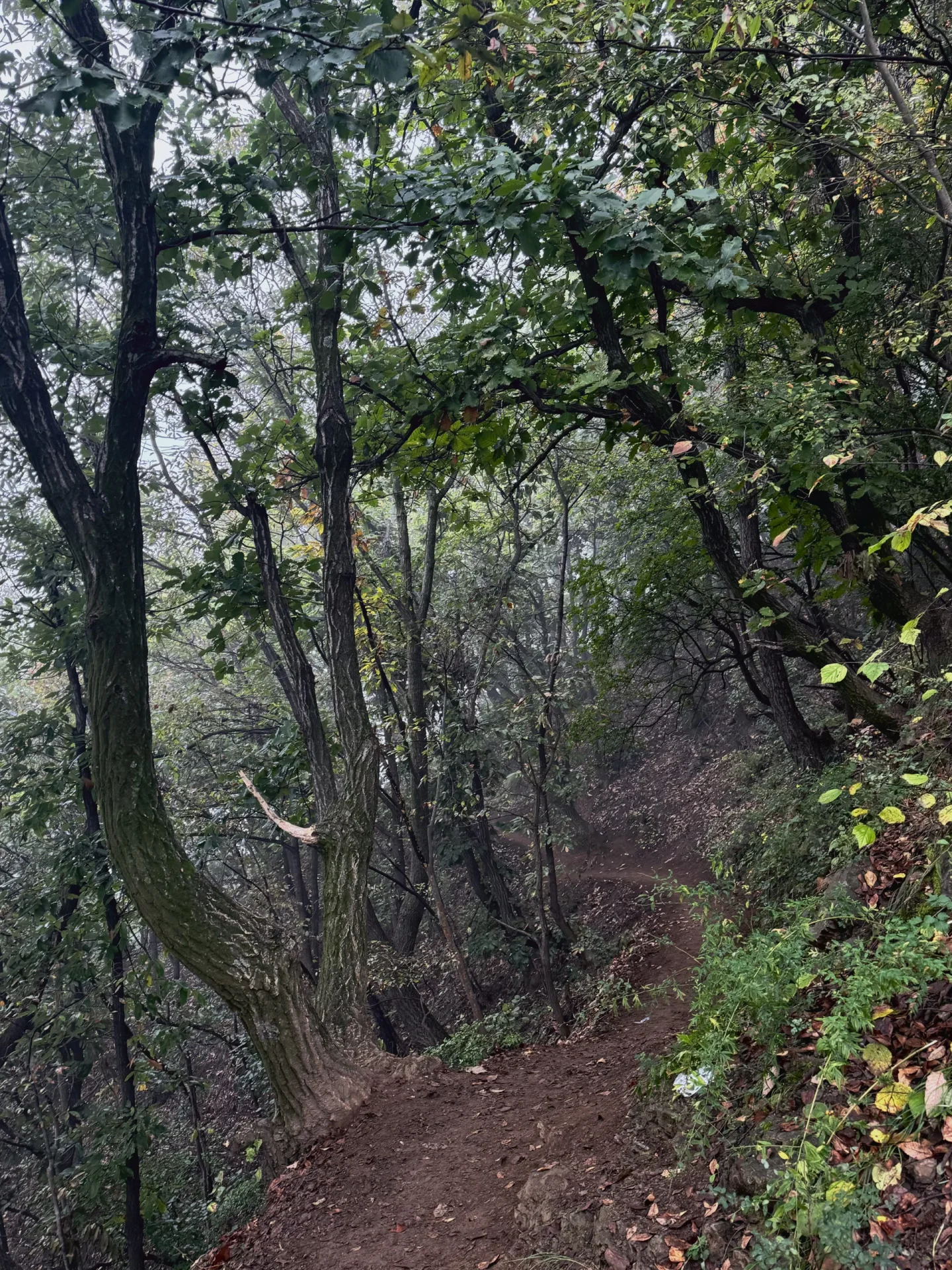
If downhill walking bothers your knees, slow the outing down, choose shorter controlled steps, and reassess the surface and remaining descent. Trekking poles and a manageable pack can be useful parts of that plan, but practice with them on an easy slope first. If discomfort continues or changes how you walk, stop and reconsider the route rather than pressing toward a mileage target.
Choose the descent before you start climbing
Look at the return on the map and in the trail description. Repeated tall steps, loose gravel, and wet rock can make the downhill section demanding even when the climb seems straightforward. Choose an established route with footing you can handle throughout the day.
For a first attempt at a hill after an uncomfortable outing, choose somewhere easy to shorten. A familiar trail gives you a better basis for judging pace and equipment than a long new loop. Consider the descent while you still have several route options.
A walker on a roughly 3.7-mile outing took regular stone steps uphill and encountered loose stones on a rougher return. Their practical advice for beginners was to return by the more predictable route. Choose a maintained descent in advance rather than assuming any downhill shortcut will be easier.
Give each step a manageable landing
As LEKI’s downhill technique guidance explains, your leg brakes your downward movement as each foot lands, placing load through the knee. Use a short stride to place your foot deliberately and lower yourself with control, rather than rushing into the next landing. Let the slope set the speed, and leave room between yourself and the next walker. A secure landing is more useful than keeping the cadence you had on the climb.
On stairs, pause before a step that feels too tall to manage comfortably. Look for an established alternative within the trail, or reconsider the route.
For loose ground, look a few steps ahead while continuing to check the next landing. Avoid rushing toward a flat section you can see farther below. The National Park Service’s trail guidance advises taking time and watching your footing, especially where surfaces are slippery.
Let wet footing change the schedule. A hiker on a 6.3-mile walk with about 2,340 feet of gain reported slower downhill progress in rain; the full day took five to six hours with stops. Leave room for a slower return before choosing how far to climb.
A familiar dry trail can feel different after rain. Recheck where you can turn around, and keep the group together while making that decision. A forecast or closure notice may settle the question before the hike begins.
Try poles before the long downhill section
Trekking poles add contact points, but they need a secure plant and sound locks. Practice on a short, easy slope where you can stop to adjust. Start with the handles comfortable in your hands and the tips placed where they will stay put.
LEKI’s downhill pole instructions describe adjusting the reach and placing the poles ahead for descending. Keep the movement close enough that you can maintain control. Return to an easier section if managing the poles competes with watching your feet.
Check every adjustable section before relying on it. If a section slides when you apply controlled downward pressure, stop using that pole for support until the problem is resolved. A closed lever and a secure pole are two things to verify separately.
If you need your hands for a rail or another secure handhold, stop and stow the poles first. Avoid juggling a camera, phone, and pole while stepping down. Make equipment changes somewhere with room to stand comfortably.
Keep the load comfortable on the return
Pack what the route requires and check how the bag sits with that load. Secure loose items and keep the load from swinging as you shorten your steps. Try the arrangement on familiar ground before adding a lengthy descent.
Choose shoes that fit and suit the surface, then check them during the walk if your foot starts moving inside them. Stop before changing lacing. Look at both footing and fit rather than expecting one item of equipment to solve the entire descent.
Powered assistance also needs a separate downhill check. A hip-assist device acts at a different place from knee-assist equipment; ask what the exact model is intended to do on descents. Try its settings, pack clearance, and comfort while switched off before choosing a longer route.
An uphill sensation of help is a reason to assess the return carefully. Keep the full worn weight and battery plan in mind when choosing distance. Use a short trial to decide whether the equipment suits that particular walk.
Stop before the day becomes a scramble to finish
Rest where you can stand or sit securely, with space for others. Check how much descent remains, the daylight available, and whether you have a simpler return. Let companions know early if you need a different pace.
One hiker described a day lasting about ten hours, including lunch, photographs, and rests, with approximately 3,500 feet of climbing. The continuous stony descent near the end felt especially difficult after several days of hiking. The useful planning lesson is to keep time and attention for the last section, even when the summit climb feels manageable.
An ordinary stop can also reveal whether a strap has loosened or a pole setting needs attention. Make one adjustment at a time, then reassess on easy ground. If walking remains uncomfortable, choose the available way to shorten the outing.
Know when to seek medical help
Contact a medical professional if you cannot bear weight, have severe pain, a knee that locks or gives way, marked swelling, or fever with redness or warmth, as described in MedlinePlus’s advice on when to seek care.
FAQ
What can help with knee problems walking downhill?
Begin with route choice, a slower pace, shorter controlled steps, and equipment you have practiced using. Give the descent enough time and stop if discomfort persists. A familiar, shorter trail makes it easier to reassess before you are far from the start.
Can trekking poles help when walking downhill?
They provide additional contact points when planted securely and used with sound locks. Practice reaching the ground ahead on an easy slope, then check your grip and footing together. Keep the poles within comfortable reach instead of stretching toward each plant.
Should you walk faster to finish a difficult descent?
Keep the speed low enough to choose and control your next step. Stop somewhere secure to review the remaining route and discuss a shorter return with your group. Treat a change in comfort as information for the plan.